15 best Cherwell alternatives for your next ITSM as Cherwell EOL approaches


Cherwell will discontinue support for its current platform by December 31, 2026.
After December 2026, Cherwell users will no longer receive critical updates, security patches, or technical support. The impending EoL (End of Life) poses a significant challenge for Cherwell's existing customer base – not to mention, the security risk.
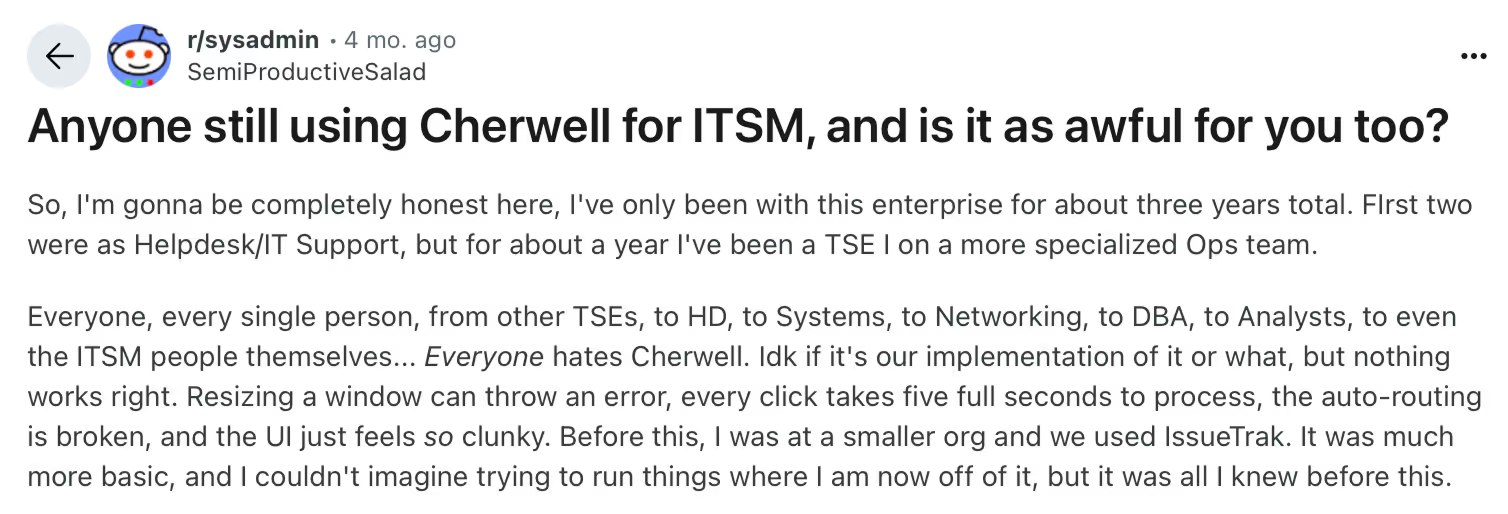
For many IT professionals, this announcement didn't come as a surprise – in fact, for some, it was welcome news. According to recent discussions on Reddit, many organizations have been battling Cherwell's performance issues and clunky interface for years.
If you're still running Cherwell, you already feel the pressure. RFPs are in flight, migration partners are booking up, and the closer you get to December, the fewer good options you'll have.
This post breaks down 15 alternatives worth evaluating, compares them on the dimensions that actually matter for a Cherwell migration, and gives you a practical framework for planning the switch while you still have runway. With 98% of organizations now using AI or planning pilot projects, the platform you migrate to will shape how your IT team operates for years.
Before we go any further, here’s some background on the impending Cherwell EoL.
What does Cherwell’s End of Life actually mean for your IT team?
Cherwell started as a strong mid-market ITSM platform, known for its codeless configuration and flexible workflow engine. When Ivanti acquired it in 2021, the intention was to provide customers with a more comprehensive set of tools to manage their IT operations, service desk, and overall business processes. Cherwell continued to operate as a distinct brand and product line under Ivanti.
Two years later, in October 2023, Ivanti announced End of Life, with the full cutoff set for December 31, 2026 - terminating both renewals and product support.
Here’s what that actually means in practice:
Cloud customers: Your tenant gets deactivated within 30 days of the EoL date if you’re on a supported version. If you’re on an unsupported version, your cloud environment may be deactivated at your next renewal date, which could be sooner. Either way, if you haven’t migrated, your team loses access entirely.
On-premises customers: Your instance can technically keep running. But you won’t get security patches, bug fixes, or any form of vendor support. Every month you stay on an unsupported system widens your security and compliance exposure.
**All customers:** Ivanti is no longer renewing contracts for unsupported versions. The latest release is Cherwell Service Manager 2025.2 (June 2025), with full technical support ending December 2026. All versions prior to 2023.1 are already unsupported and ineligible for renewal. Ivanti has also said that upgrading from an unsupported version to a supported one is not a recommended path. The effort is better spent migrating to a new platform entirely.
An estimated 2,000+ organizations worldwide are navigating this transition. The forced timeline creates real urgency, particularly for teams with complex customizations, deep integrations, or regulatory data retention requirements.
This is why the EoL announcement has come as a shocker for its existing clientele, which primarily consists of mid-to-large-sized enterprises.
It’s about time existing Cherwell customers started evaluating alternative solutions and planning the migration while they still have some runway.
Here’s our pick of the top 15 alternatives that Cherwell users can consider:
Top Cherwell alternatives at a glance
Before diving into each tool, here’s a quick-reference comparison to help you narrow the field:
1. Atomicwork
Atomicwork is an agentic service management platform built natively with AI and owning context across multiple systems.
The platform has a Universal Agent (called Atom) that lives where your employees already work: Microsoft Teams, Slack, email, or the browser. Atom doesn’t just surface knowledge from SharePoint, Confluence, and Notion but acts on it. Password resets, app provisioning, incident triage, service request routing, all happen seamlessly with AI agents and proper audit trails.
What makes Atomicwork relevant for Cherwell migrants is the depth behind the AI. You’ll get a full-stack service management platform: incident, change, asset, request management, access governance, and analytics. The platform has also expanded into Agentic IGA for context-aware access provisioning, a capability Cherwell never had.
Like many organizations, we had a traditional service desk experience built on a traditional IT service management platform. What struck us about Atomicwork was the company and the product was being built from the ground up with an AI-first lens. - Steven Meek, CIO of PepperMoney (switched from ServiceNow)
Read the full case study here.
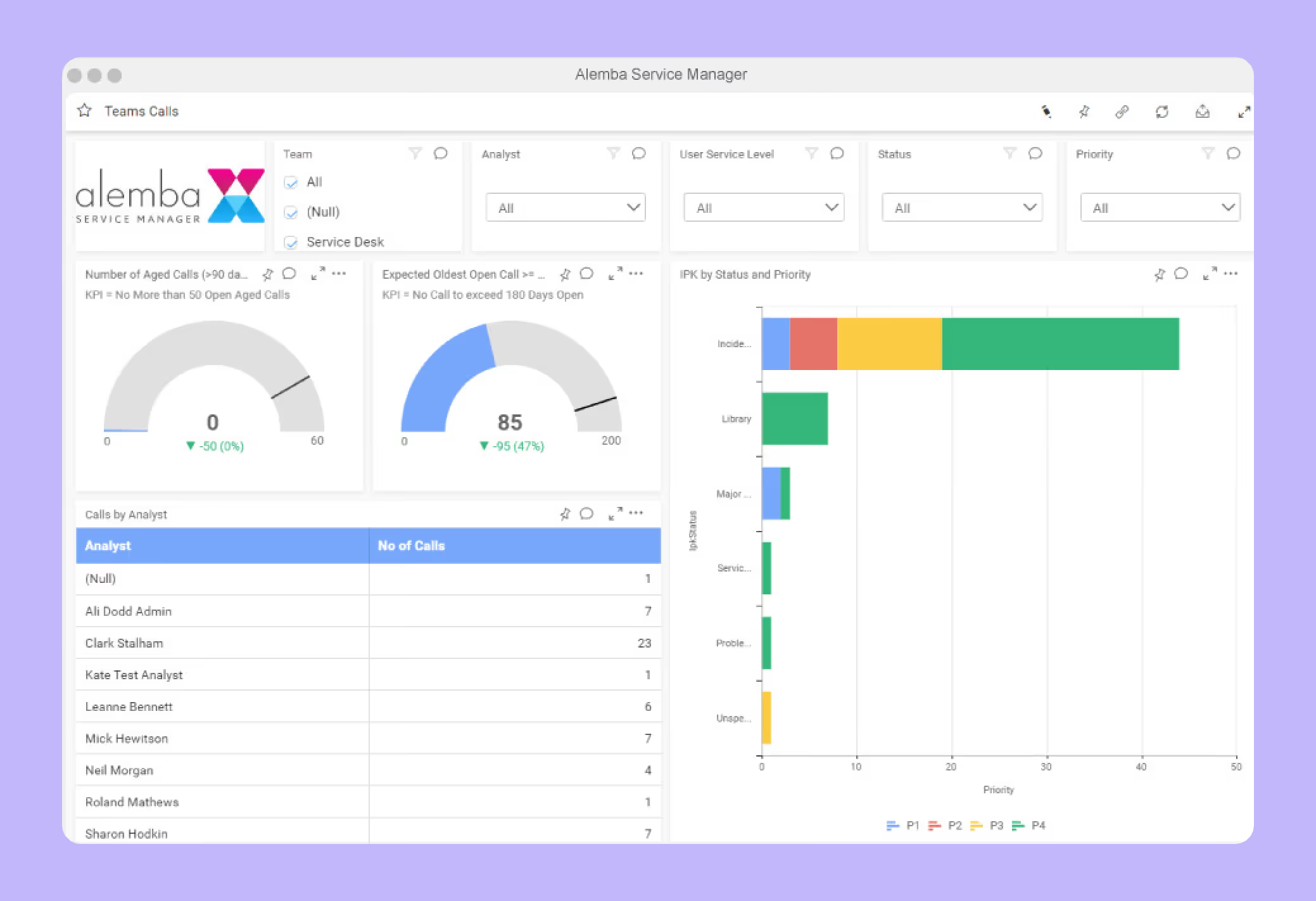
2. Alemba Service Manager
Alemba Service Manager (ASM) positions itself as a strong alternative to Cherwell for organizations that relied heavily on Cherwell’s flexibility and codeless workflow engine.
The platform is Pink Elephant ITIL-verified across 22 processes, one of the broadest ITIL verifications in the market. Its graphical workflow engine lets teams automate virtually any process (IT, HR, Facilities) while maintaining compliance and audit trails. That maps directly to the kind of workflow customization Cherwell customers are accustomed to.
It is suitable for organizations with complex, non-standard workflows that more opinionated platforms can’t accommodate. If your Cherwell environment was heavily customized and you need to replicate that level of process tailoring, Alemba deserves a close look.
3. BMC Remedy ITSM Suite
The BMC Remedy ITSM Suite is a legacy ITSM platform that still offers modules covering various ITSM processes, such as incident management, problem management, and change management, among others.
The BMC Remedy ITSM Suite is well-suited for large, complex organizations with mature ITSM processes that require an enterprise-level platform to manage their service delivery needs. BMC Helix is not a platform you’ll deploy in weeks. It requires significant configuration, dedicated admin resources, and often a systems integrator. If your Cherwell environment was heavily customized and you need that same level of configurability, BMC is worth evaluating. If you’re looking to simplify, this probably isn’t the direction.
However, if your organization requires an on-premises solution for ITSM, BMC might be worth looking at.

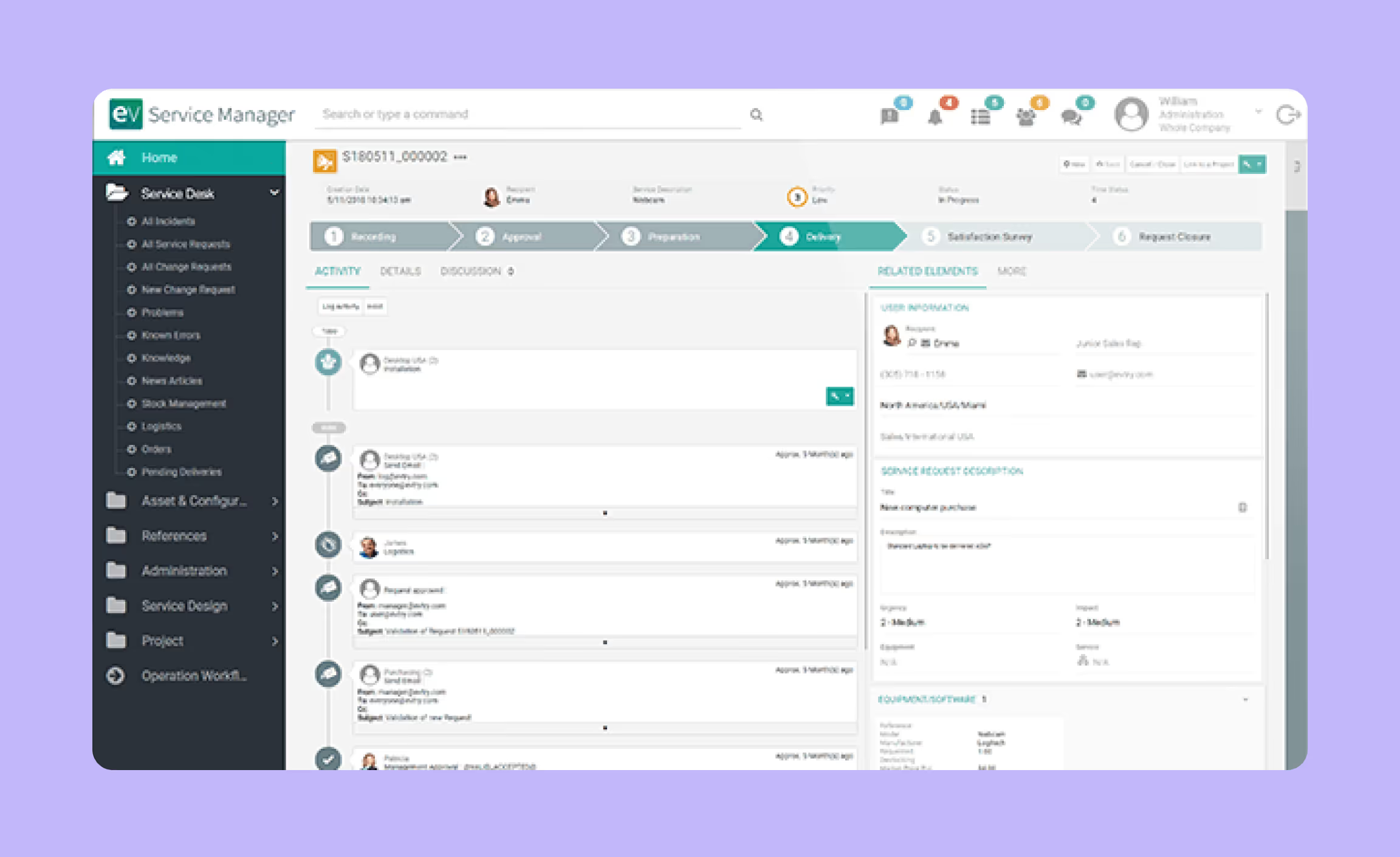
4. EasyVista
EasyVista offers an AI-driven platform that simplifies complex IT challenges. After acquiring OTRS, the company has strengthened its position in the ITSM market with a comprehensive suite that includes service management, remote support, orchestration, and self-help.
Their pitch to Cherwell customers centers on lower total cost of ownership, faster implementation timelines, and a partnership-first approach. For mid-to-large organizations that want a proven ITSM platform without the weight of a ServiceNow implementation, it’s worth including in your RFP.
5. Freshservice
Freshservice is a cloud-based ITSM platform from Freshworks with built-in AI: conversational chatbots for self-service, AI-assisted ticket routing, and agent productivity tools, all native rather than requiring third-party integrations.
It covers incident management, asset management, change management, release management, and offers ESM capabilities for HR, Finance, and Facilities.
The average implementation time for Freshservice is 2 months according to the G2 Implementation Index, roughly half the time of comparable platforms. For Cherwell customers watching the December 2026 clock, speed matters.
For small-to-mid-sized teams that want built-in AI, fast deployment, and a clean interface, it’s one of the strongest options here. The constraint: teams with highly bespoke Cherwell workflows may find Freshservice’s configuration options more limited.

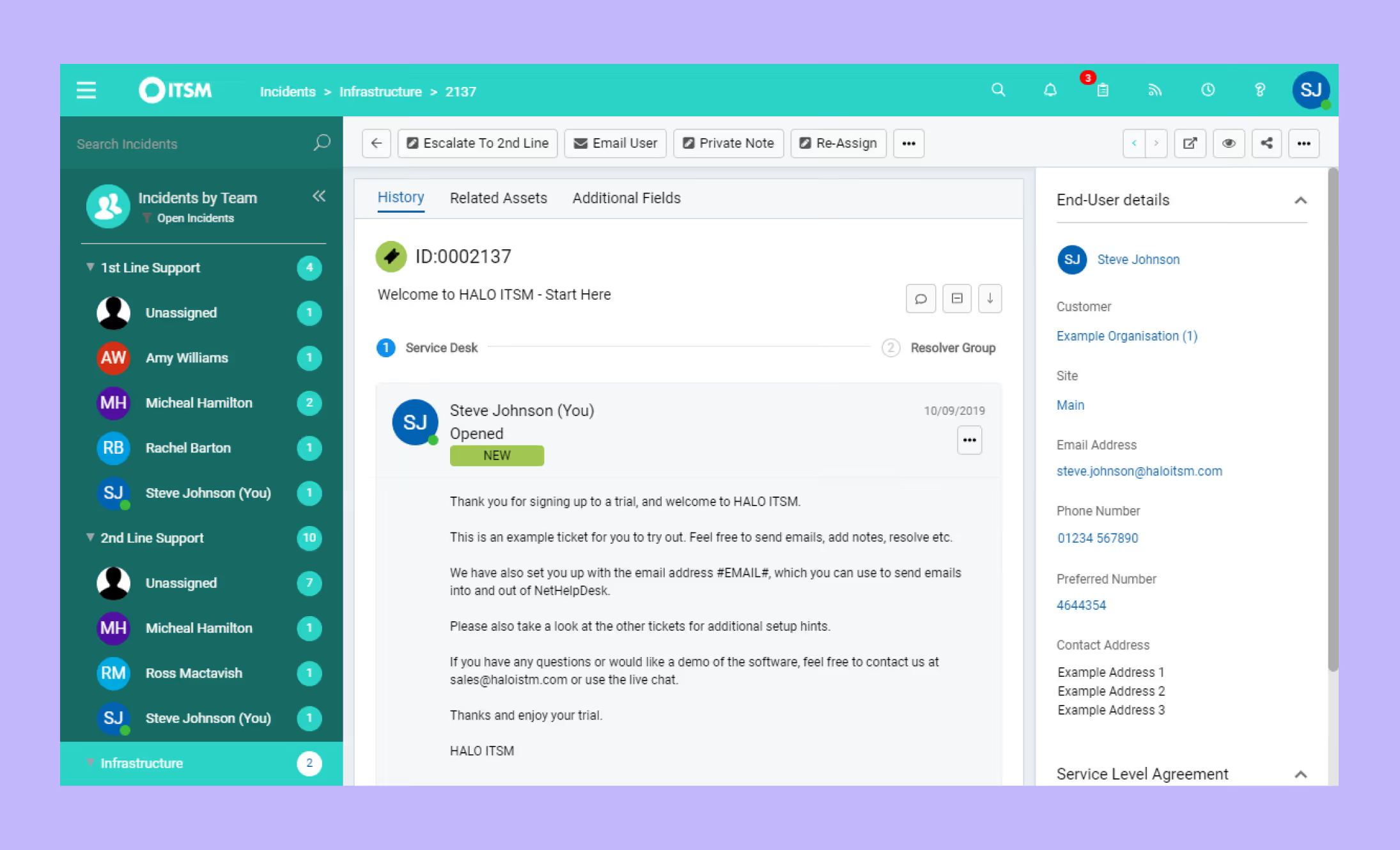
6. HaloITSM
HaloITSM covers incident, problem, change, release, and asset management, along with project management, time tracking, and a service catalog. Every licensed agent gets access to the full platform with no locked modules or no separate charges for asset management, change control, or knowledge base.
The tradeoff: that flexibility comes with a configuration learning curve. Some reviewers describe the setup as detailed but complex, and organizations without experienced admins may need implementation consulting. Once configured, though, HaloITSM delivers strong capability for the price. Available in the cloud and on-premises.
7. Invgate
Invgate is a no-code service management and asset management solution that’s focused on keeping things simple.
It covers the core ITSM use cases (incident management, service requests, workflow automation, self-service) alongside strong asset management: network discovery, inventory management, license management, and software metering.
Available in the cloud and on-premises, Invgate is a good fit for mid-market organizations that don’t need heavy ESM and want a tool they can manage without a dedicated admin team.

8. Ivanti Neurons
Ivanti having acquired Cherwell, is actively steering Cherwell customers toward it as the default migration path.
Neurons is not a new product. It was formerly known as Ivanti Service Manager and has been in market for over a decade, trusted by several Fortune 100 companies. Ivanti has invested in converging Cherwell’s differentiating capabilities (particularly codeless configuration) into Neurons, and the platform includes AI-driven automation, predictive analytics, and a unified self-service portal.
That said, the reception from Cherwell customers has been mixed. Independent partners have noted that Neurons still lacks feature parity with Cherwell in several areas. Many customers feel the migration feels forced rather than merit-based, and frustration with Ivanti’s communication around the EoL has colored perceptions of the entire brand.
The safer move is to evaluate Neurons alongside other options rather than defaulting to it because it’s the path of least resistance. The convenience of staying within the Ivanti ecosystem is real, but so is the risk of moving to a platform you didn’t choose on its merits.
9. Jira Service Management (JSM)
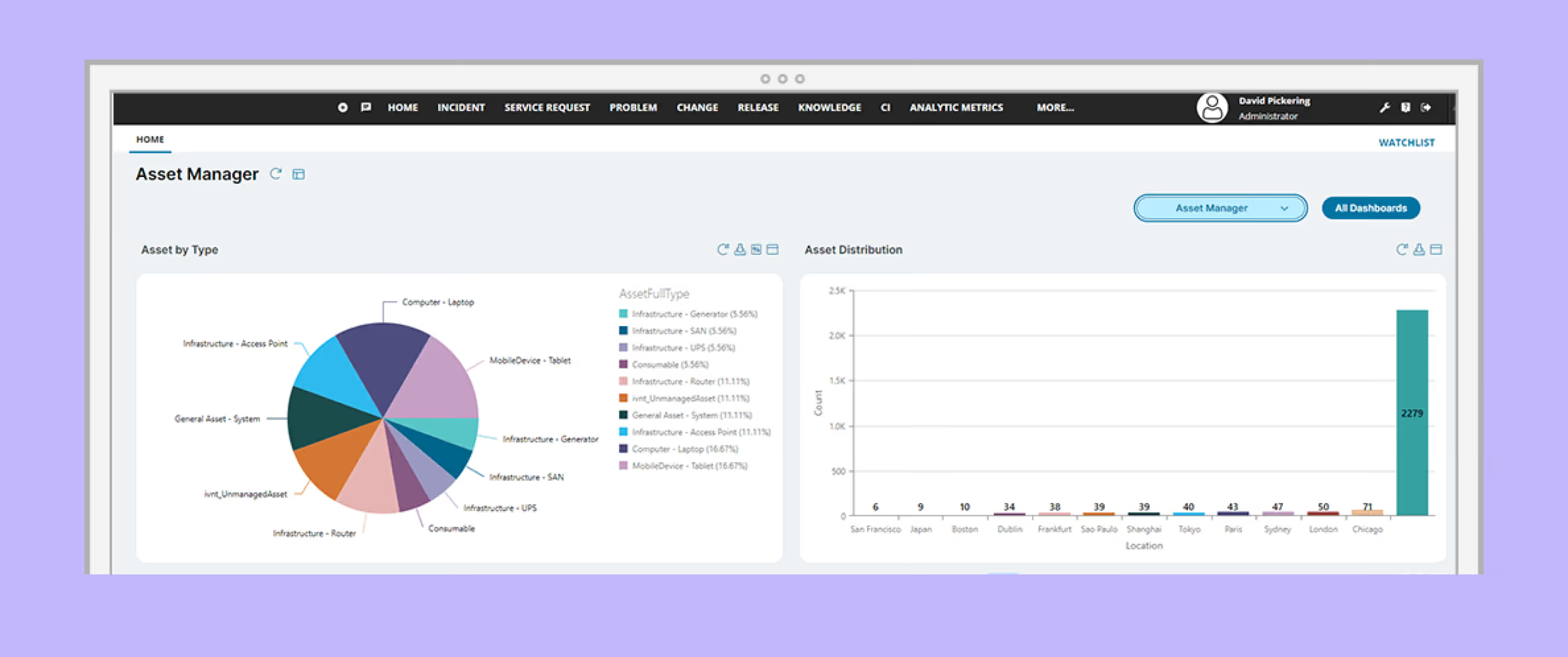
If your organization already runs on Jira, Confluence, and Bitbucket, Jira Service Management (JSM) slots in naturally. That tight integration is both its biggest strength and its biggest limitation.
Developers, IT ops, and service desk teams share the same platform, making JSM strong for DevOps-oriented organizations that want to bridge development workflows with IT service management.
It covers incident, problem, change, and asset management, plus a service portal, knowledge base, and AI features through Atlassian Intelligence.
Where it gets thin: JSM is not as deep as ServiceNow for enterprise-wide ESM. If you need workflows for HR, Legal, Procurement, and Facilities on one platform, JSM will feel constrained. It’s also not built for physical device logistics or lifecycle management.

10. ManageEngine ServiceDesk Plus
ManageEngine ServiceDesk Plus is a comprehensive ITSM solution that provides a wide range of service management features.
ServiceDesk Plus covers incident, problem, change, asset management, and CMDB. It’s available on-premises and in the cloud, with dedicated engineering teams for each deployment model.
The platform integrates with ManageEngine’s broader ecosystem (Endpoint Central, OpManager, PAM360, ADManager Plus), which helps if you’re already in that stack.
For cost-conscious mid-market teams that want solid ITSM fundamentals without the enterprise price tag, ServiceDesk Plus is a practical pick.

11. Servicely
Servicely is a newer entrant built AI-natively (not bolted on).
It covers the full ITSM lifecycle: incidents, problems, changes, assets, CMDB, and extends into ESM for HR, Facilities, and other business functions. The platform is ITIL-aligned and highly configurable, which matters for Cherwell customers who relied on codeless customization.
Good fit for organizations that want enterprise-level configurability, native AI, and a migration partner familiar with the Cherwell ecosystem. It’s newer, so the user community and third-party ecosystem are smaller than established players. Factor that into your evaluation.
12. ServiceNow
ServiceNow is a leading cloud-based ITSM and ESM platform. The solution offers out-of-the-box features to meet most organizations' IT needs.
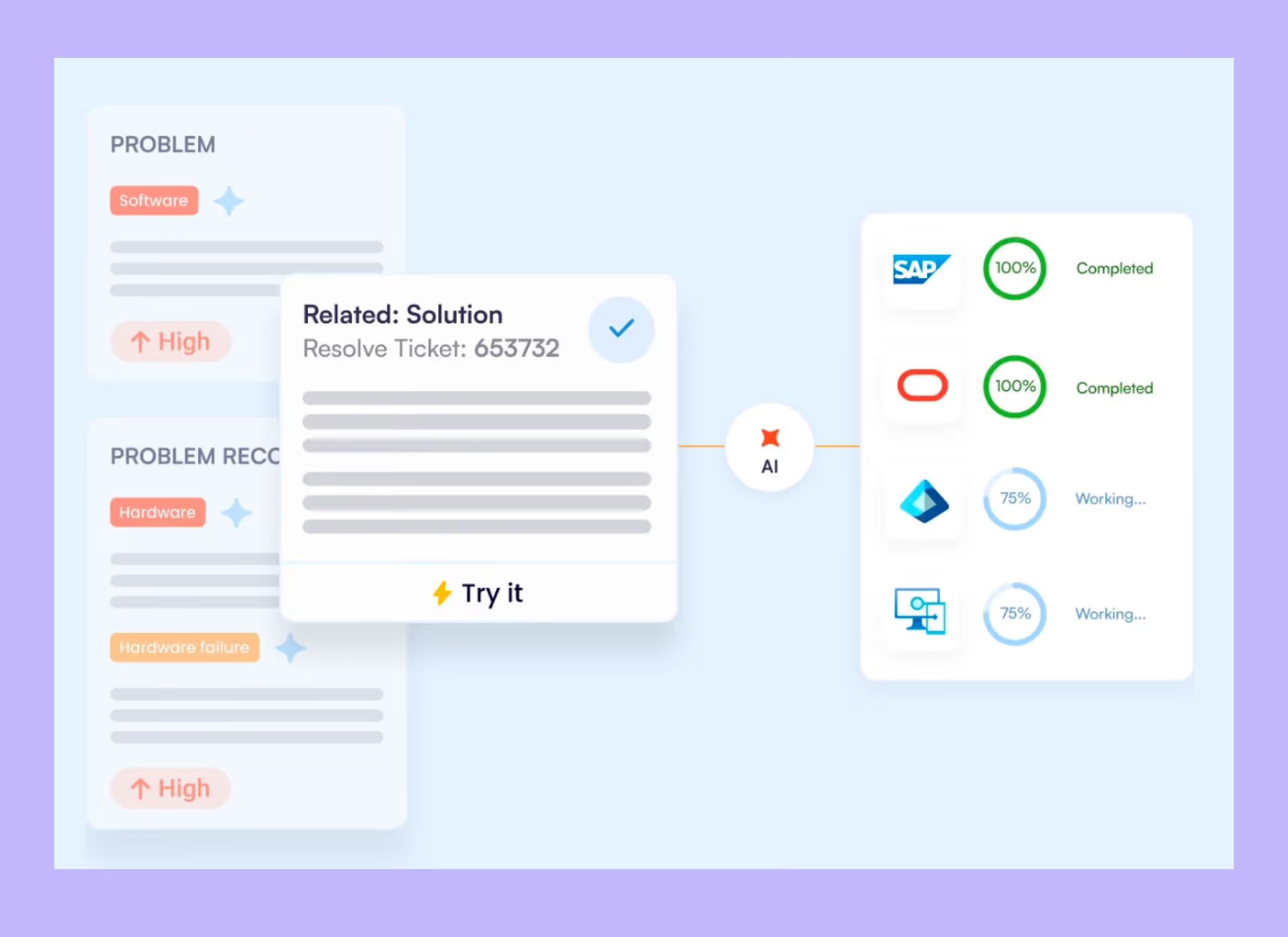
It offers the deepest feature set of any ITSM tool: incident, problem, change, asset, knowledge, CMDB, and an expanding set of AI capabilities through Now Intelligence. It scales to the largest enterprises and has a massive integration ecosystem.
But ServiceNow is expensive, both in licensing and implementation. Most deployments need a systems integrator, and time to value is measured in months, not weeks. It’s also overkill for mid-market teams that don’t need or can’t afford enterprise-level complexity.
If budget and development resources aren’t constraints, and you need a platform that can handle anything you throw at it, ServiceNow is the safe choice. Go in with realistic expectations about cost and timeline.

13. SolarWinds
SolarWinds Service Desk combines service management, asset management, CMDB, and reporting into a single, comprehensive platform. After its recent acquisition by Turn/River Capital, the company has continued to enhance its ITSM capabilities with AI-driven automation.
It’s aimed at smaller IT teams that want a consolidated tool without enterprise complexity. It’s functional for straightforward ITSM needs, but it doesn’t offer the AI depth, ESM breadth, or migration-specific support that other options on this list provide. If simplicity and consolidation are your priorities, it’s worth a look. If you’re building toward an AI-forward IT operation, you may outgrow it quickly.
14. SysAid
SysAid offers a comprehensive ITSM solution with generative AI baked into every element of IT management. Their platform includes AI Agents that can anticipate needs, make decisions, and take action with minimal human intervention.
SysAid is known for its quick implementation time and intuitive interface that makes it easy for teams to get up and running.
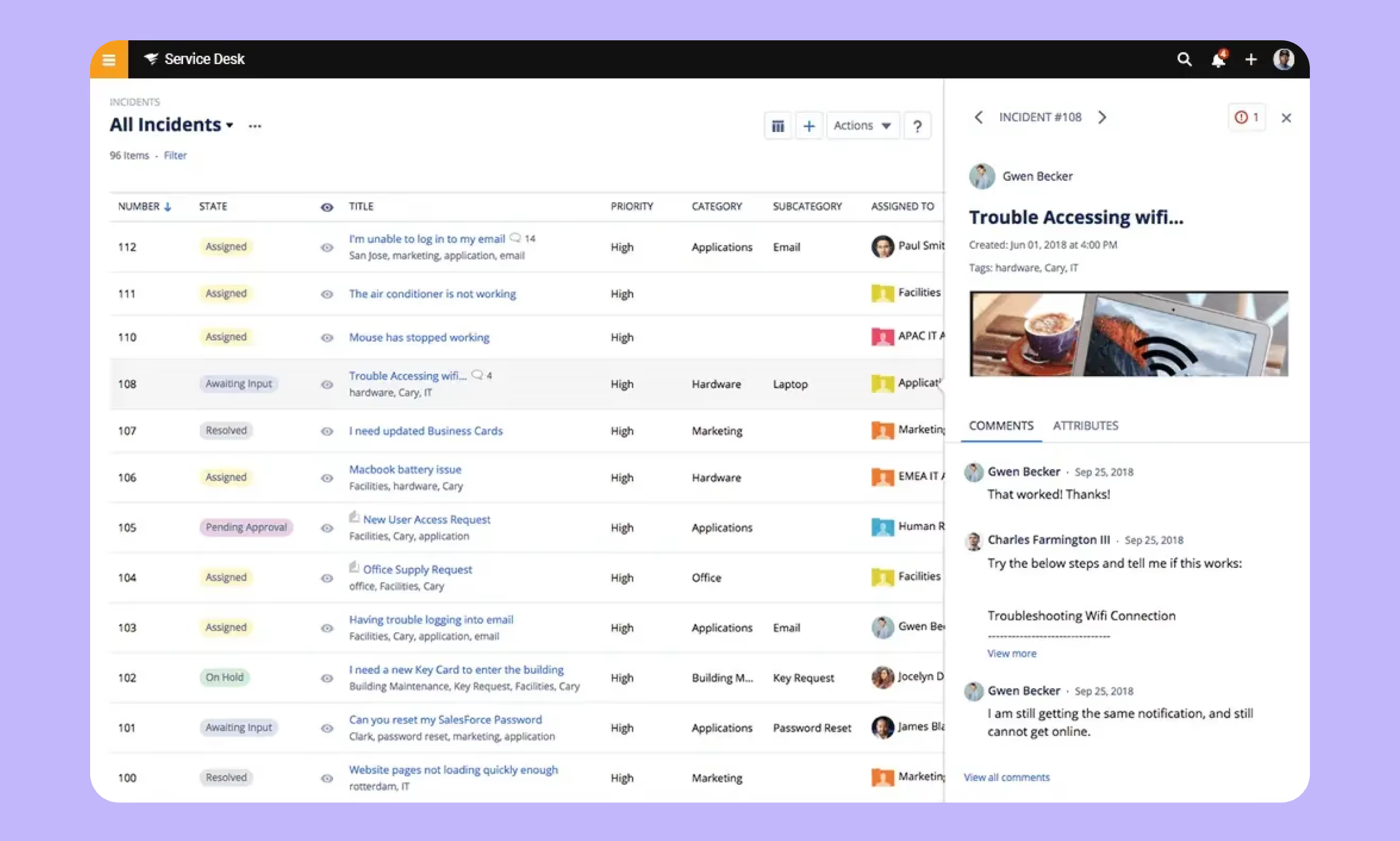
It combines help desk functionality, asset management, self-service, and workflow automation with a focus on fast implementation and an intuitive interface. Teams can get up and running quickly, which matters for Cherwell customers racing the December 2026 deadline.
Available in the cloud and on-premises, it is a good fit for SMB and mid-market teams that want real AI capabilities without the overhead of a ServiceNow implementation.
15. Zendesk for IT
Zendesk's IT help desk solution comes at internal IT from a different angle. Its customer experience DNA shows up in a polished interface, strong automation, and good self-service, but with a lighter touch on the ITIL framework than dedicated ITSM platforms.
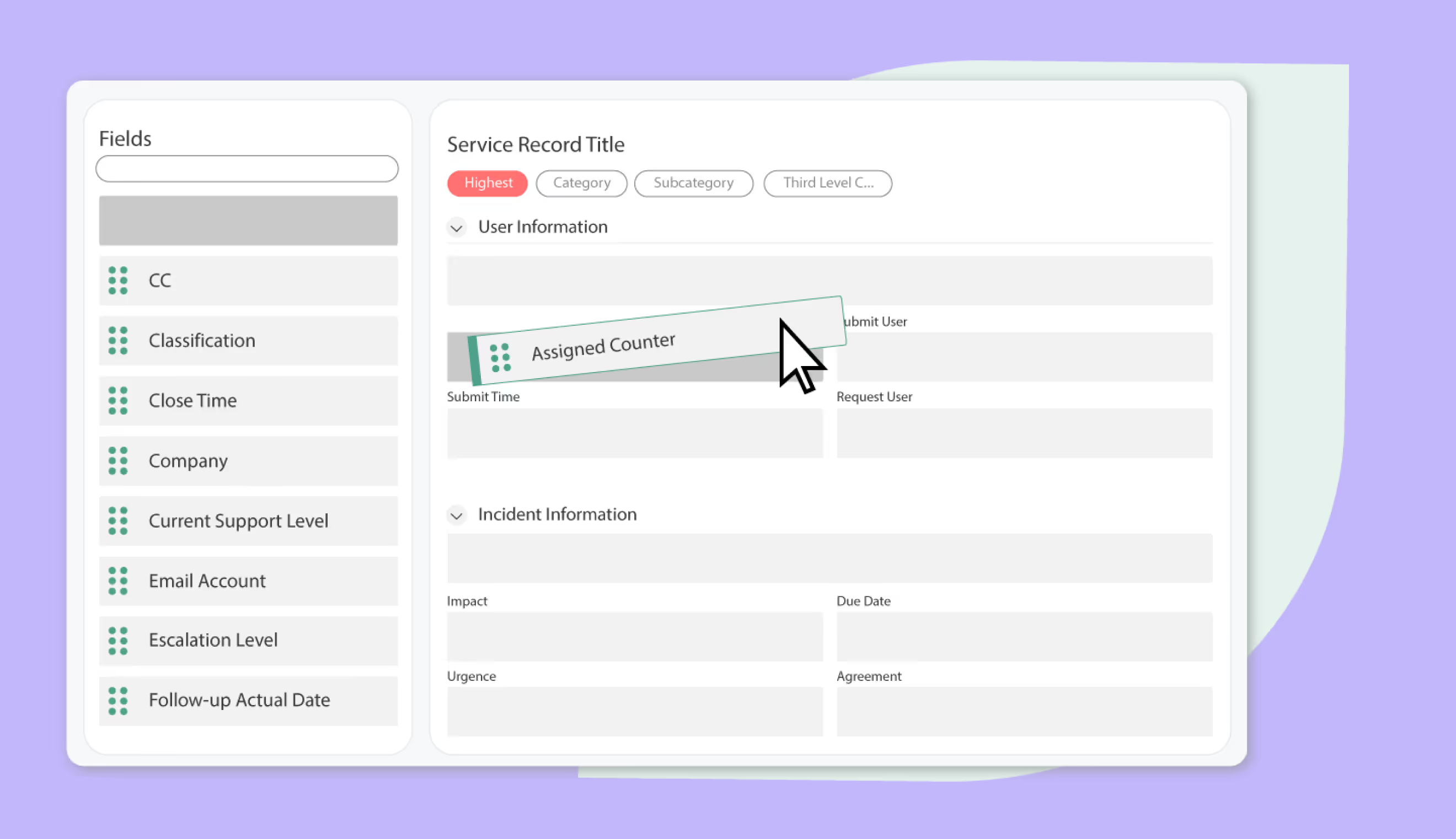
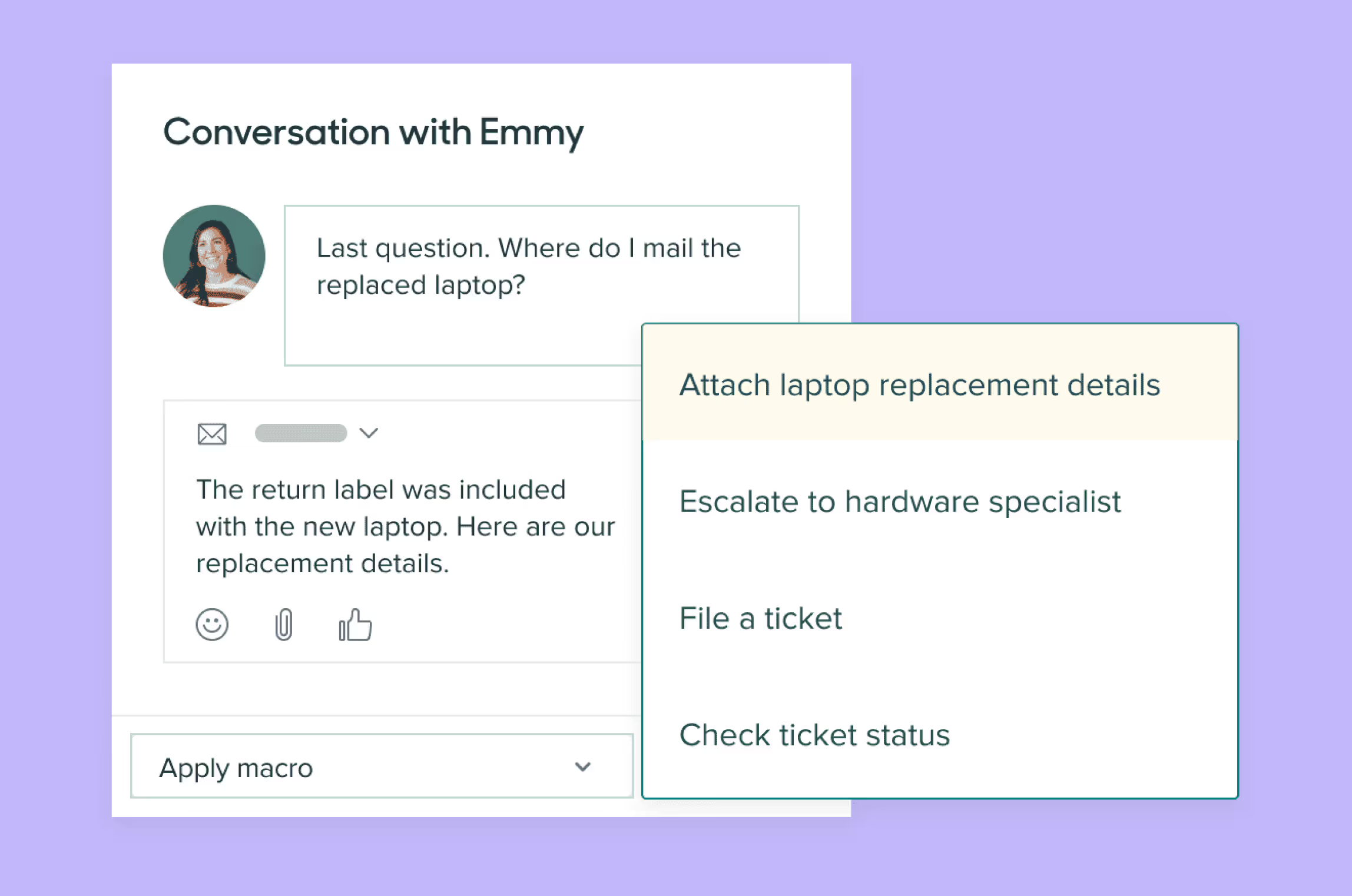
Using automation to manage incidents, events, and service requests, Zendesk helps IT teams solve problems faster with predefined responses called macros. The platform makes it easy to measure key IT metrics with pre-built and custom reports, driving smarter business decisions.
Where Zendesk falls short for Cherwell replacements is depth. It doesn’t match the change management, asset management, or CMDB capabilities of dedicated ITSM platforms. If your organization already uses Zendesk for customer support and wants to consolidate, it makes sense. Otherwise, you’ll be trading ITIL coverage for UX.
How should you plan your Cherwell migration timeline?
The alternatives in this list span no-code and low-code ITSM platforms, AI-native newcomers, and established enterprise suites, covering different org sizes, IT maturity levels, and budget ranges.
Here’s a practical framework for approaching the migration:
Start with your requirements, not the vendor list. Map your current Cherwell usage: which ITIL processes are active, what’s customized, what integrates with what. Then decide which of those you actually need to replicate versus which are legacy artifacts you can leave behind.
Work backward from the deadline. If your target is a smooth cutover before December 2026, you need your new platform selected and contracted by mid-2026 at the latest. For complex environments, earlier. Factor in data migration, testing, training, and parallel running. For a structured approach, the ITSM Software Buyer’s Guide provides a 7-step evaluation framework.
Separate data migration from archival. Don’t burden your new platform with a decade of historical tickets. Migrate what’s operationally needed. Archive the rest separately. If you have regulatory retention requirements (HIPAA, SOX), plan your archival strategy now, not in Q4 2026 when everyone else is scrambling.
Ask about migration-specific support. Several vendors on this list may have built dedicated Cherwell migration programs. Lean on them. You’re not the first organization making this move.
A stitch in time saves nine
Despite the forced timeline, the EoL announcement is also an opportunity. Whatever you choose next should be built for an era where AI handles the repeatable work, context moves with the ticket, and your IT team focuses on the problems that actually require human judgment.
Cherwell customers should carefully evaluate each option based on their specific needs, budget, and long-term strategic goals.
With the Cherwell EoL fast approaching, it is essential to map out a detailed migration process and timelines to ensure a smooth transition.
Disclaimer: We, at Atomicwork, have built ITSM solutions in the past and understand the challenges that IT leaders and organizations grapple with. With the immense power that AI offers, we were able to build a agentic service management solution for 2026 and beyond.
If you’d like a walkthrough of the platform, sign up for a demo.
Frequently asked questions on Cherwell Alternatives
1. What happens to Cherwell cloud customers after December 31, 2026?
Cloud-hosted Cherwell instances on supported versions will be shut down by Ivanti within 30 days of the EoL date. Customers on unsupported versions may see their cloud environments deactivated earlier, at their next renewal date. On-premises customers can keep running their systems but will receive no support, security patches, or updates from Ivanti.
2. Can I upgrade to a newer Cherwell version to buy time?
Ivanti has said upgrading from an unsupported version is no longer recommended. The process is resource-intensive and offers minimal runway since all versions lose support by December 2026. That investment is better directed toward selecting and migrating to a new platform.
3. How long does a typical Cherwell migration take?
Timelines vary by complexity. Simple environments have been migrated in as little as 8 to 10 weeks. Organizations with heavy customizations, complex integrations, or large data sets should plan for 6 to 12 months including testing and training.
4. What should I do with my historical Cherwell data?
You have several options: migrate all data to the new platform (expensive and complex), export to flat files (loses relationships), keep Cherwell running unsupported (security risk), or use a purpose-built archive tool. Separating archival from migration is generally the cleanest approach.
5. Which Cherwell alternatives have native AI capabilities?
Platforms like Atomicwork, SysAid, and Servicely have built AI into their platforms natively. ServiceNow and JSM offer AI features as premium add-ons. BMC Helix and ManageEngine have added AI-assisted features but are primarily workflow-driven platforms.
6. Should I migrate to Ivanti Neurons just because Ivanti recommends it?
Not necessarily. Evaluate Neurons alongside other options. Independent partners have noted that it still lacks feature parity with Cherwell in several areas, and many customers have expressed frustration with the forced migration messaging. Make the decision based on your requirements, not vendor pressure.