13 Top BMC alternatives for smarter IT in 2026

Today's IT teams are increasingly vocal about their frustrations with legacy software.
Take BMC Remedy, for instance. Their outdated interface, extensive customization requirements, and scalability issues have become increasingly painful for IT teams as evident in this Reddit thread.
The pent-up frustrations also arise from the explosive adoption of AI in other software, which has led service teams to naturally expect similar capabilities in their ITSM solutions.
And the competitive landscape itself has changed. ServiceNow acquired Moveworks for $2.85 billion in 2025. Automation Anywhere acquired Aisera a month earlier. Two prominent AI-layer alternatives have been absorbed into larger platforms, narrowing the field for teams evaluating standalone options.
That’s what makes this list different from last year’s. The market consolidated, agentic AI matured, and the bar for what counts as a modern ITSM platform moved up.
Instead of settling for BMC's limitations, you now have modern options that align with the expectations of today's IT teams and needs.
Why look for a BMC alternative?
BMC Helix is a comprehensive service management solution with powerful features for incident resolution, change management, and asset tracking. On paper, it is the safe choice.
But safe doesn't always mean suitable.
The current version of BMC Helix faces several key challenges that might make alternatives worth exploring:
- Interface frustrations: The system's navigation is described as "a bit of a hassle," causing noticeable slowdowns in responsiveness when your team needs speed and efficiency.
- Technical expertise requirements - Configuration often demands higher levels of technical proficiency, which can lead to implementation delays if your organization has limited IT resources.
- Scalability concerns - As organizations handle increasingly extensive datasets, BMC Helix shows limitations that could lead to performance issues as you grow.
- Cost considerations - Between licensing fees, consultation costs, and maintenance expenses, the total cost of ownership can quickly exceed budget expectations for many organizations.
Newer platforms are now built specifically to address these pain points, leveraging modern technologies like generative and agentic AI. Whether you're looking for simpler interfaces, easier implementations, better scalability, or more cost-effective solutions, the following BMC alternatives bring unique strengths to help transform your IT operations in 2026.
1. Atomicwork
Atomicwork is an agentic service management platform built for enterprises ready to move beyond ticket-centric ITSM. Instead of routing tickets through queues and rule-based workflows, Atomicwork operates through coordinated AI coworkers that understand requests, access organizational context, and execute actions autonomously.
The platform’s Universal AI agent, Atom, lets employees request and receive support directly in Microsoft Teams, Slack, email, or the browser without any portal navigation or form submissions. Behind Atom, specialized agents handle incidents, access management, knowledge retrieval, change workflows, asset operations, and onboarding. These agents share a live execution layer grounded in identity systems, permissions, device data, and historical records.
In practice, organizations report meaningful deflection improvements after deployment. Ammex Corp started at a 20% deflection rate and reached 65% within six months, with a target of 80% by year-end. Pepper Money deployed and replaced multiple incumbent solutions within six weeks, consolidating three platforms into one and reducing TCO in the process.
Built for enterprise environments, the platform includes permission-aware execution, audit trails, PII masking, and compliance alignment with SOC 2 and GDPR.
Compare Atomicwork vs. BMC in detail here.
We were able to deploy Atomicwork and replace a number of incumbent solutions within 6 weeks. We have already seen significant improvements across ticket deflection, self service and most importantly employee experience. Moving across to the Atomicwork solution also reduced our TCO by consolidating 3 different solutions into one platform. - Ryder Hampton, Head of Technology at PepperMoney
Best for: Enterprises that want to move from ticket-based operations to agent-driven service management. Not ideal if you’re looking for a simple drop-in ticket system with minimal change management.
2. EasyVista
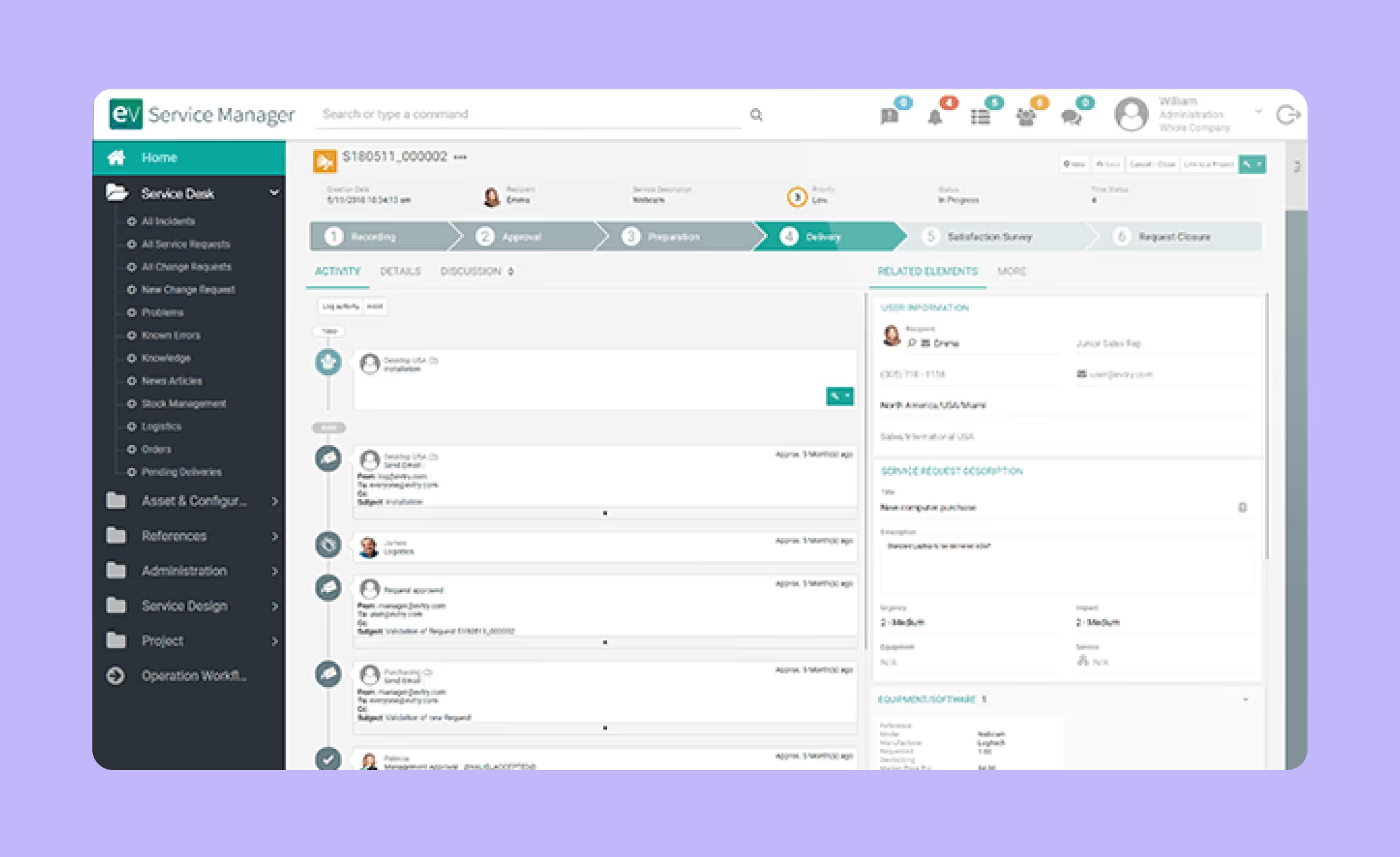
EasyVista delivers AI-powered IT service management with an ITIL-based platform combining ITSM, ITOM, remote support, and automation capabilities.
It’s focused on eliminating IT silos while providing comprehensive service delivery, and it’s added LLM-based automation and conversational AI capabilities for ticket handling.
EasyVista’s low-code/no-code customization makes it accessible for teams that want to tweak workflows without developer support.
Best for: Organizations wanting structured ITIL implementation with AI-assisted automation. Not ideal for teams prioritizing agentic, autonomous resolution.
3. Freshservice
Freshservice delivers cloud-based ITSM with an intuitive interface, making it particularly suitable for small to mid-sized businesses.
IT admins can tailor workflows to specific team needs without writing code, and the reporting tools provide real-time operational visibility at a price point that undercuts most enterprise platforms.
Where it falls short: AI capabilities are incremental rather than transformative. Freshservice can automate routing and surface suggestions, but it’s not built for autonomous resolution where a human still closes the loop on most tickets. If your goal is agentic service management, you’ll outgrow it soon.
Best for: SMBs that need an intuitive, affordable service desk. Not ideal for enterprises expecting autonomous AI execution or deep cross-functional automation.
4. Ivanti
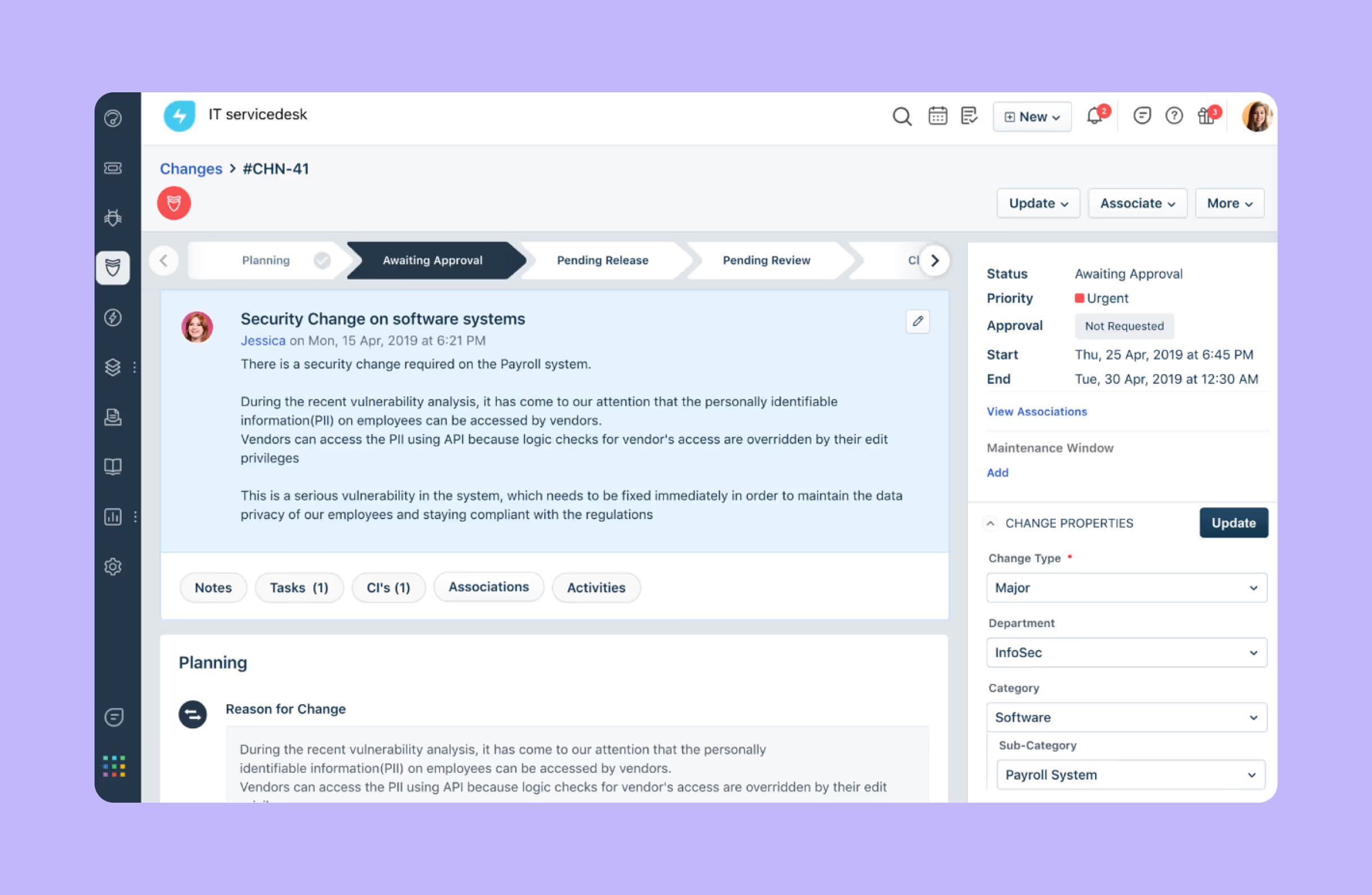
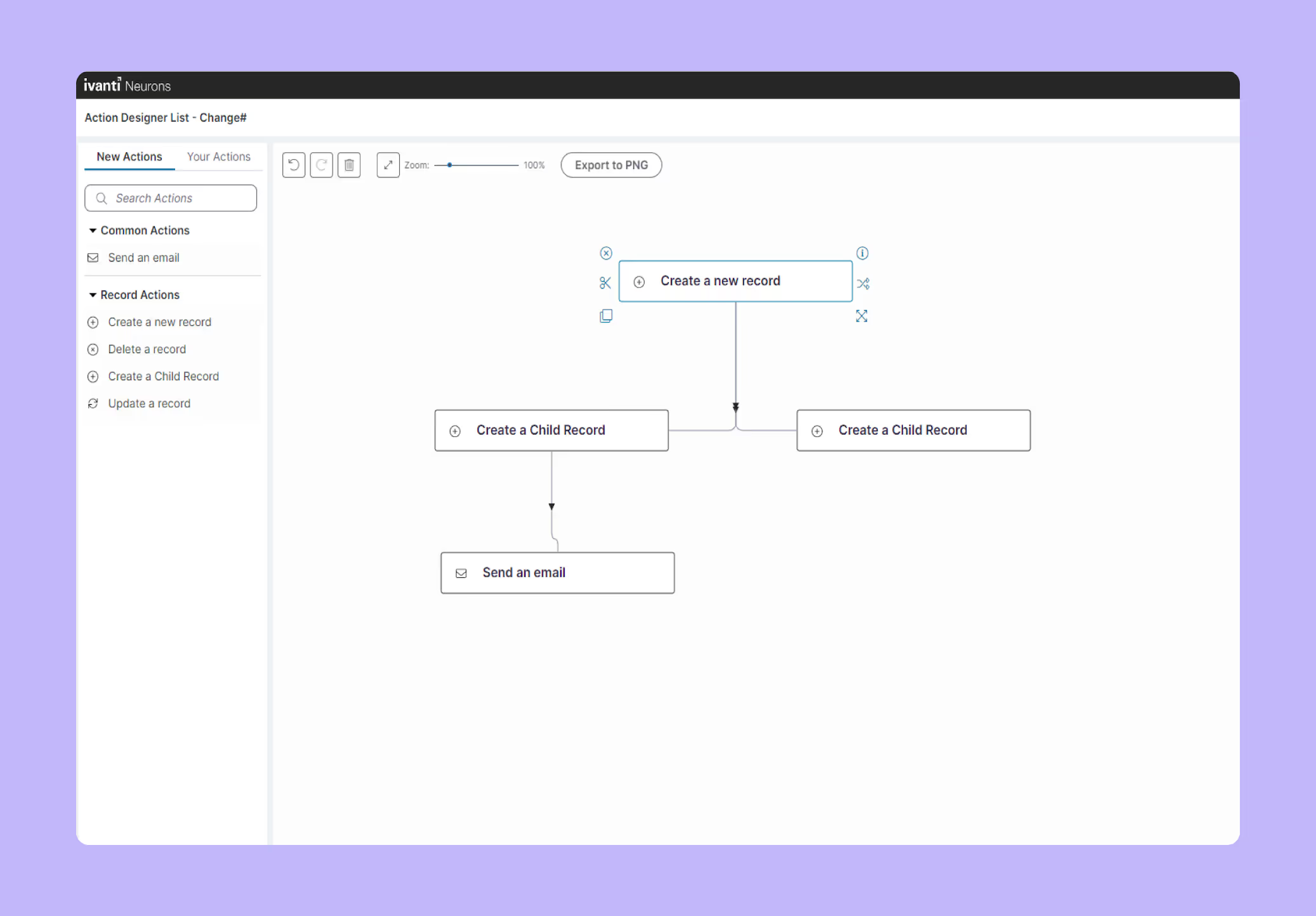
Ivanti Neurons for ITSM leverages AI to streamline operations and improve service delivery across complex IT environments. The platform excels in security integration, combining service management, endpoint security, and user experience management.
Its self-healing capabilities can detect and resolve common end-user issues before they become tickets, and the platform’s security integration is a key differentiator for orgs where endpoint protection and service delivery intersect.
The trade-off is complexity. Ivanti’s breadth across security, UEM, and ITSM means the platform can sprawl, and getting value out of the full suite takes significant implementation effort.
Best for: Security-conscious enterprises managing complex device environments. Not ideal if you’re looking for a lightweight, fast-to-deploy service desk.
5. Jira Service Management
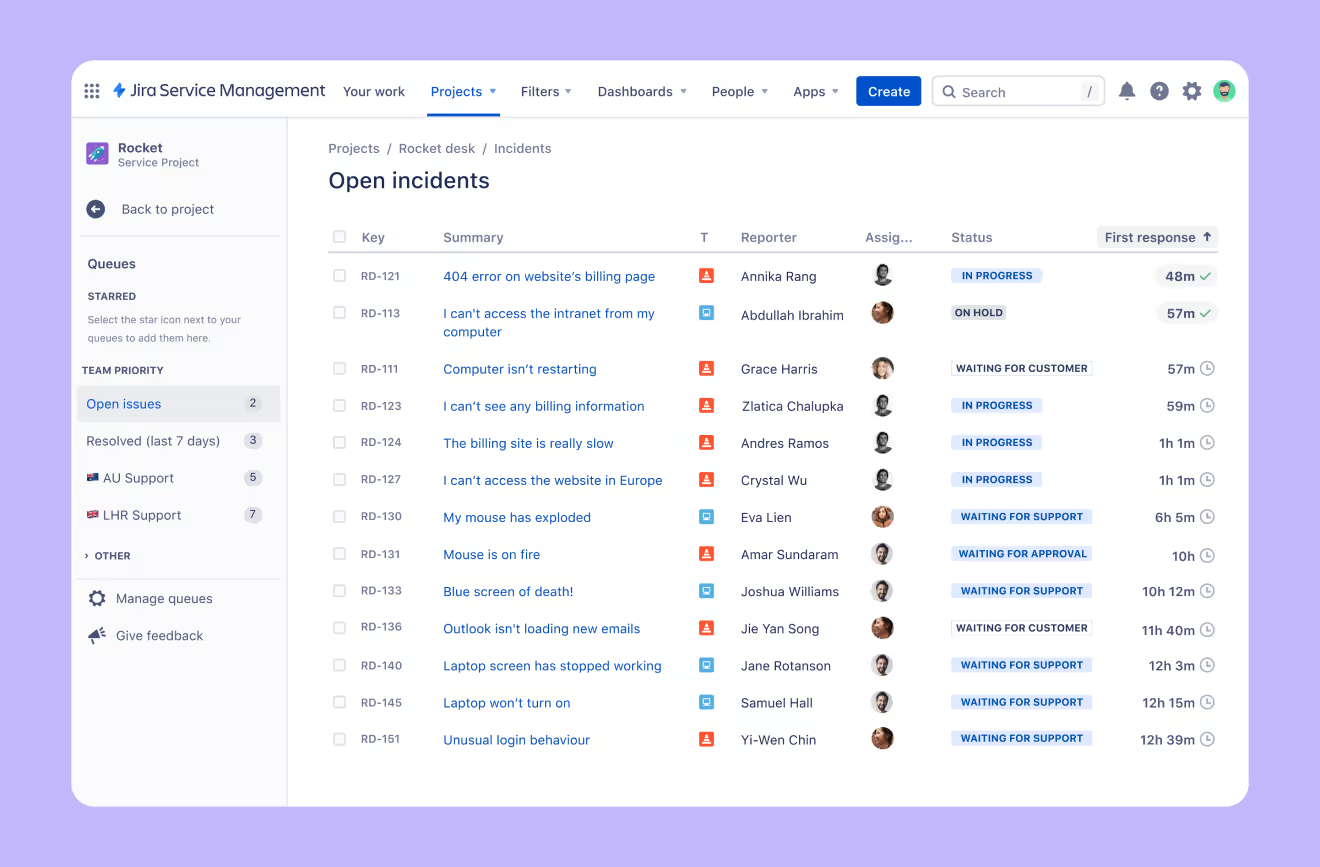
Jira Service Management is ideal for organizations already using Atlassian products.
It connects service requests directly to development workflows, making incident-to-code tracing seamless. Request summaries let users track submissions, and the ticketing system is robust for dev-ops aligned teams.
Jira SM works well for incident and request management within technical teams, but it wasn’t designed for enterprise-wide service management across HR, finance, and facilities. Asset management and change management capabilities are thinner than purpose-built ITSM platforms.
Best for: Engineering-led orgs already in the Atlassian ecosystem. Not ideal for enterprises that need full ITIL coverage across multiple departments.
6. ManageEngine
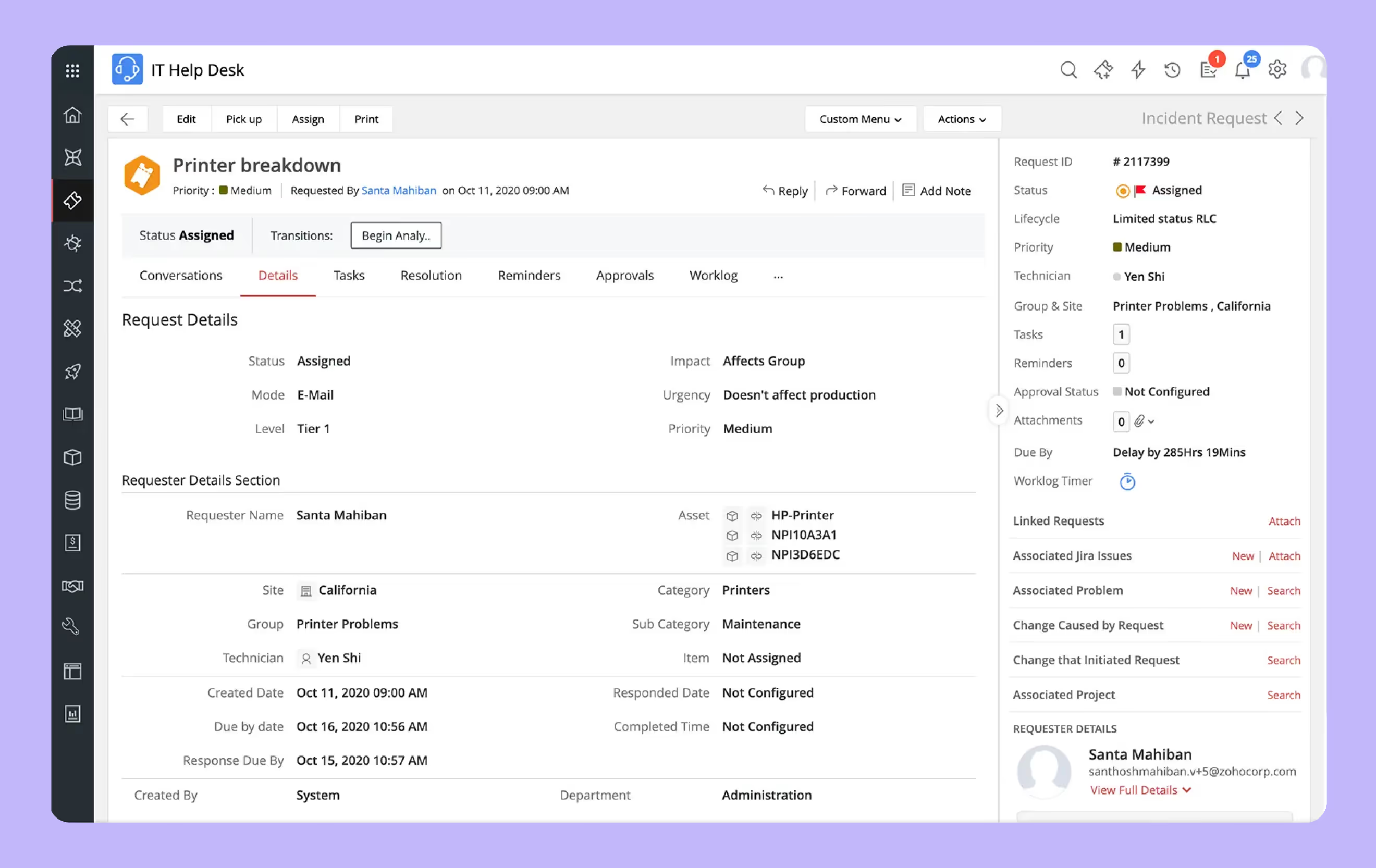
ManageEngine ServiceDesk Plus offers a breadth of ITSM features at affordable pricing that are suitable smaller IT teams.
It combines help desk, asset management, and project management in one platform. Codeless customization lets teams modify workflows, forms, and fields without programming, and the AI assistant helps with ticket analysis and resolution suggestions.
The caveat: ManageEngine’s AI capabilities are assistive, not autonomous. It’s a good fit for teams that want a flexible, affordable platform with room to grow but it’s not where you’d go for end-to-end autonomous resolution.
Best for: Cost-conscious teams that need modular, customizable ITSM without heavy implementation. Not ideal for enterprises seeking AI-native architecture.
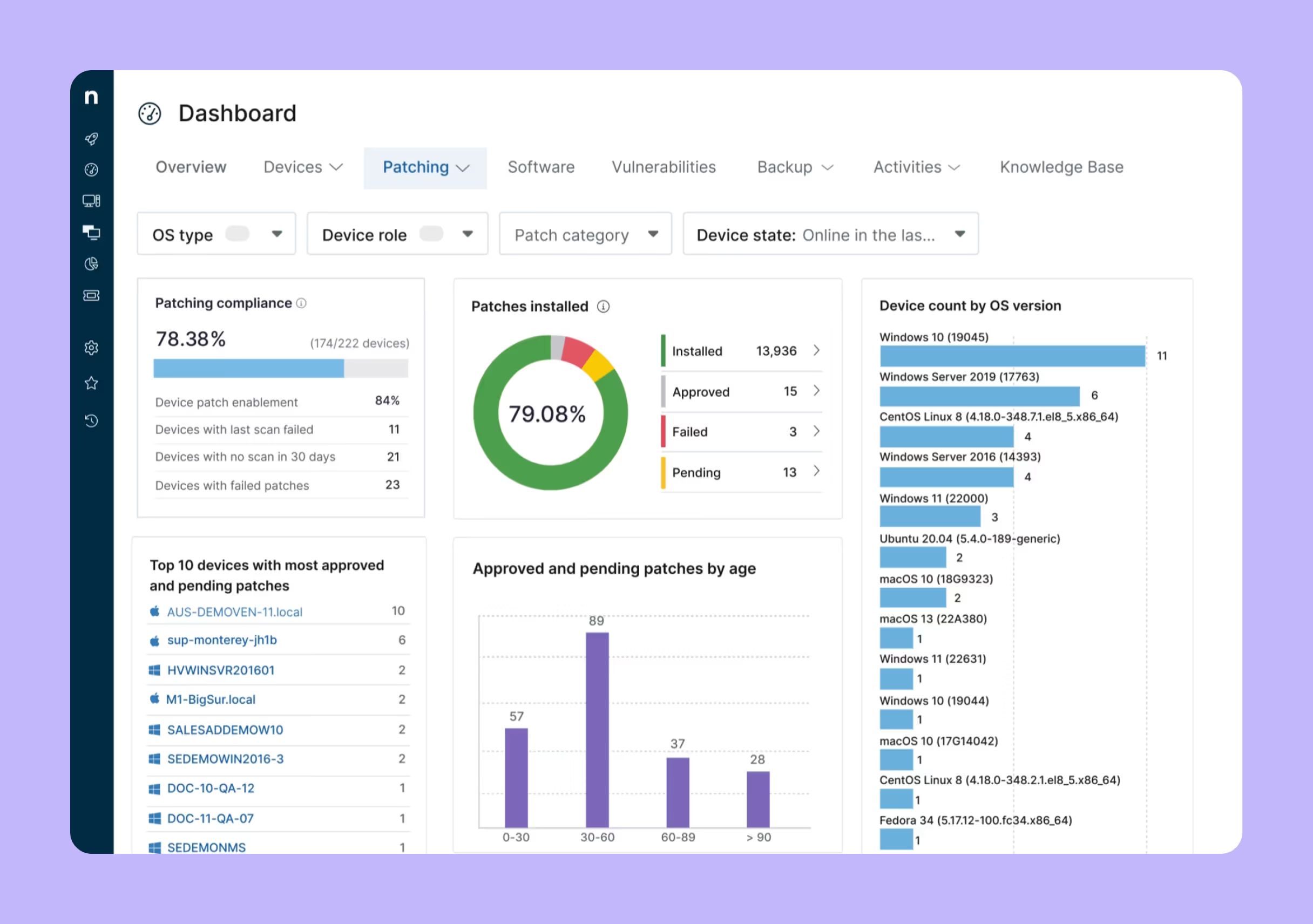
7. NinjaOne
NinjaOne offers a unified IT operations platform that combines endpoint management, monitoring, and IT service management (ITSM) capabilities. Unlike traditional ITSM tools, NinjaOne approaches service management from an endpoint-first perspective, making it ideal for distributed workforces.
Its lightweight agent performs consistently regardless of device location, which makes it strong for distributed and hybrid workforces.
The trade-off: NinjaOne’s ITSM capabilities are secondary to its endpoint management strengths. If you’re evaluating it as a full ITSM replacement for BMC, you’ll find gaps in change management, service catalog depth, and enterprise workflow automation.
Best for: IT teams managing distributed device fleets who need RMM + basic service desk in one console. Not ideal as a standalone ITSM platform for enterprises with complex service workflows.
8. OpenText
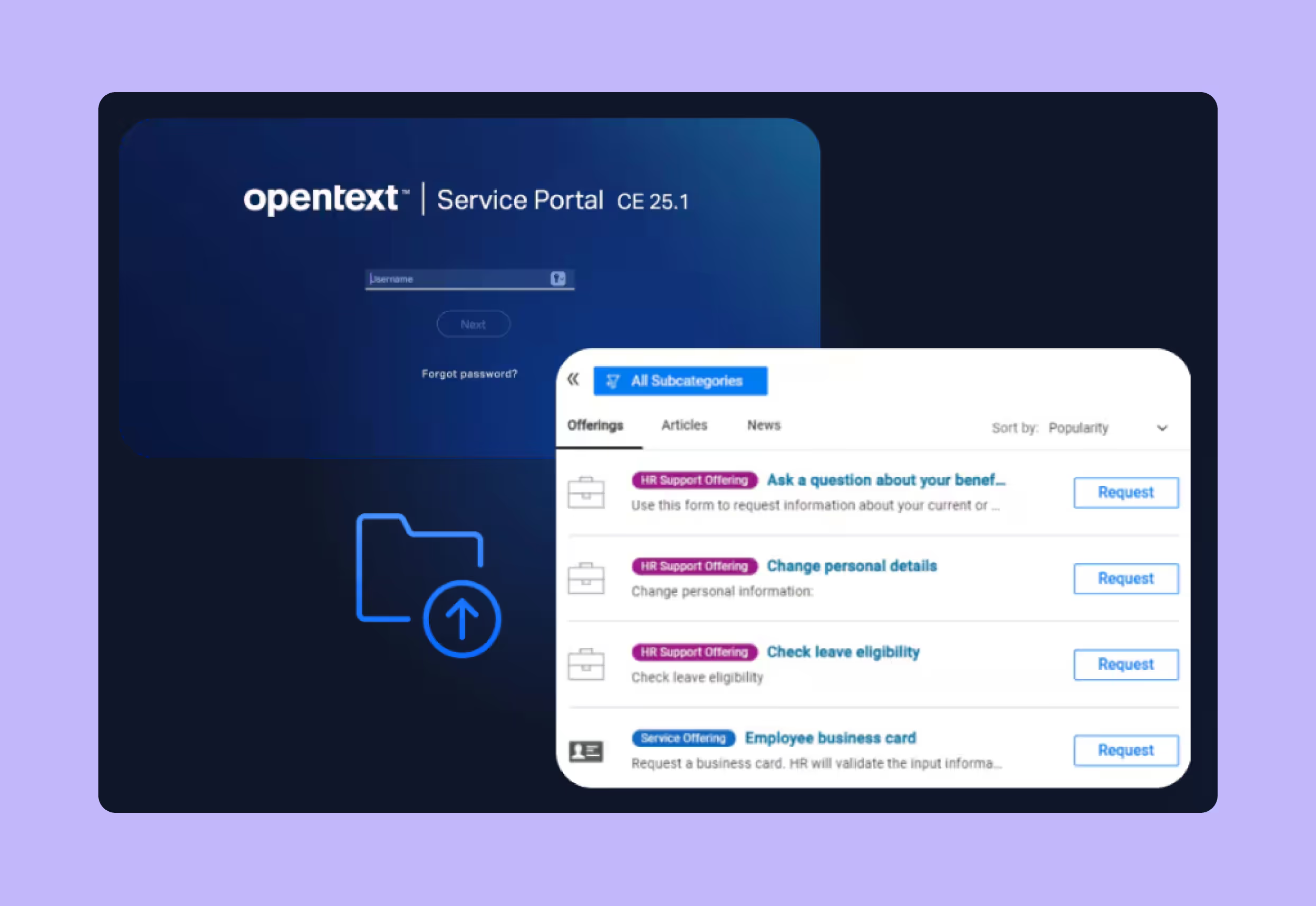
OpenText ITSM (formerly Micro Focus/HP Service Manager) provides enterprise-grade service management with comprehensive capabilities for incident, problem, and change management.
It has deep compliance features that supports cloud, on-premise, and hybrid deployment, making it one of the few options for organizations with strict hosting requirements or regulatory constraints.
The platform is mature but carries the weight of its legacy. It’s a strong fit for industries like banking, government, and healthcare where compliance depth trumps deployment speed but it’s not where you’d go for rapid modernization.
Best for: Regulated enterprises with specific hosting requirements. Not ideal for teams prioritizing speed to value or modern AI capabilities.
9. ServiceNow
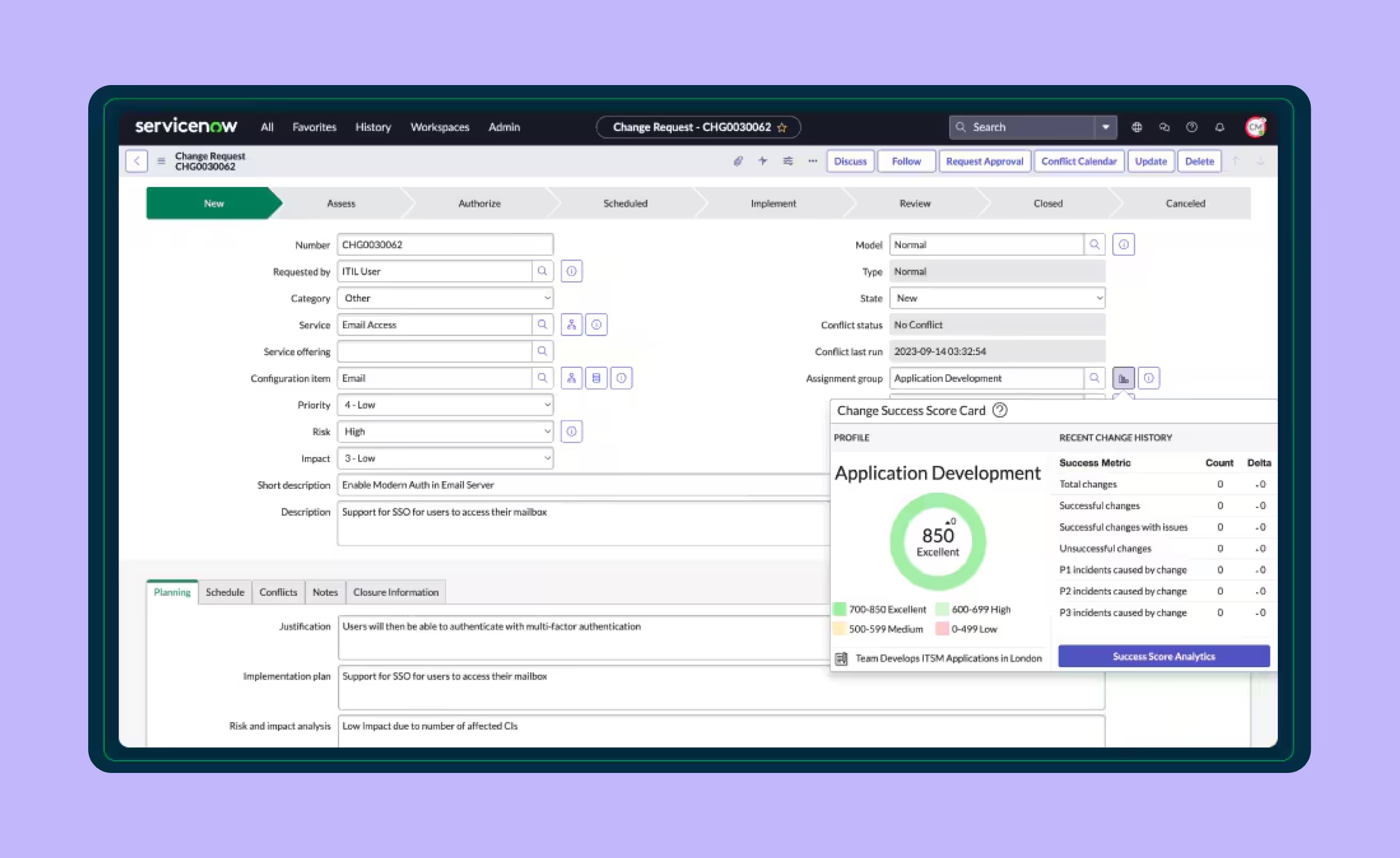
ServiceNow offers a comprehensive ITSM solution that competes directly with BMC Helix across various industries. Its AI-based NOW platform unifies IT operations through integrated modules for incident, problem, change, and asset management.
The NOW Platform unifies IT operations through structured workflows and a self-service portal.
ServiceNow completed its $2.85 billion acquisition of Moveworks in December 2025, integrating a conversational AI front-end and enterprise search capability into the platform. This gives ServiceNow a stronger agentic story, though the underlying architecture remains workflow-first.
ServiceNow excels at compliance-driven environments with structured ITIL frameworks. But it’s resource-intensive as implementation and ongoing administration typically require dedicated teams or certified consultants.
Best for: Large enterprises with the budget and headcount to run a full-scale ITSM program. Not ideal for high-growth teams that need fast deployment with minimal consulting overhead.
10. SolarWinds
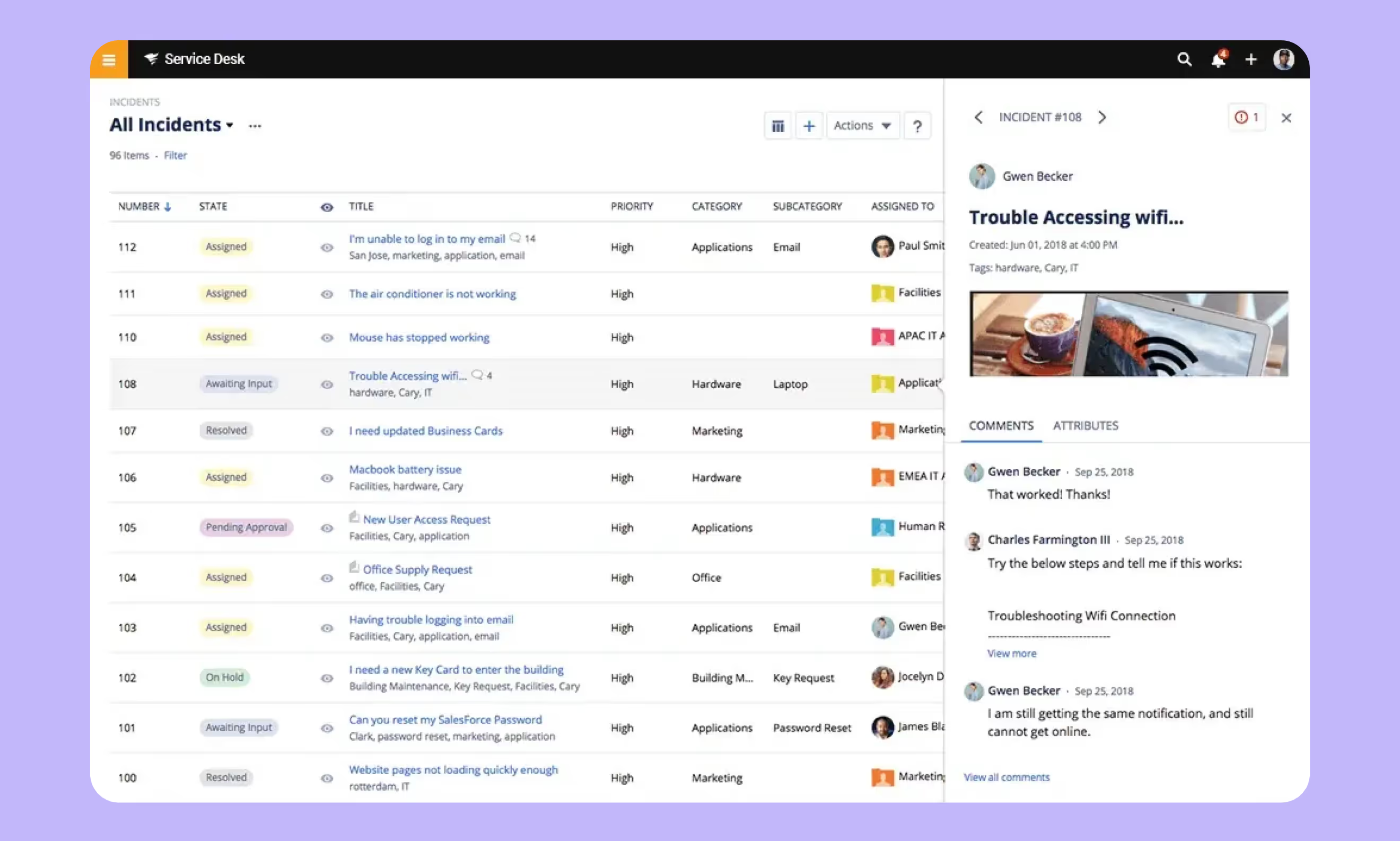
SolarWinds Service Desk provides a cloud-based help desk solution for IT teams and other departments worldwide.
SolarWinds is straightforward to set up and works well for multi-department request handling. The limitation is AI depth as this is a process automation platform, not an intelligent resolution platform. If your roadmap includes agentic capabilities, SolarWinds won’t take you there.
Best for: Teams that need multi-department service management with solid asset tracking. Not ideal for organizations with AI-first ITSM ambitions.
11. SysAid
SysAid offers a comprehensive ITSM solution with 360-degree service management, linking tickets, assets, patches, and related items to other organizational systems.
Its strength is asset management where IT teams can integrate assets directly into the support workflow, creating a unified view of what’s happening across the environment. The platform includes a knowledge base and self-service portal for common issues.
SysAid is solid for asset-intensive IT shops, but its AI and automation capabilities lag behind newer platforms. The interface has improved but still feels dated compared to cloud-native alternatives.
Best for: IT environments where asset management is central to service operations. Not ideal for teams prioritizing conversational AI or autonomous workflows.
12. TOPdesk
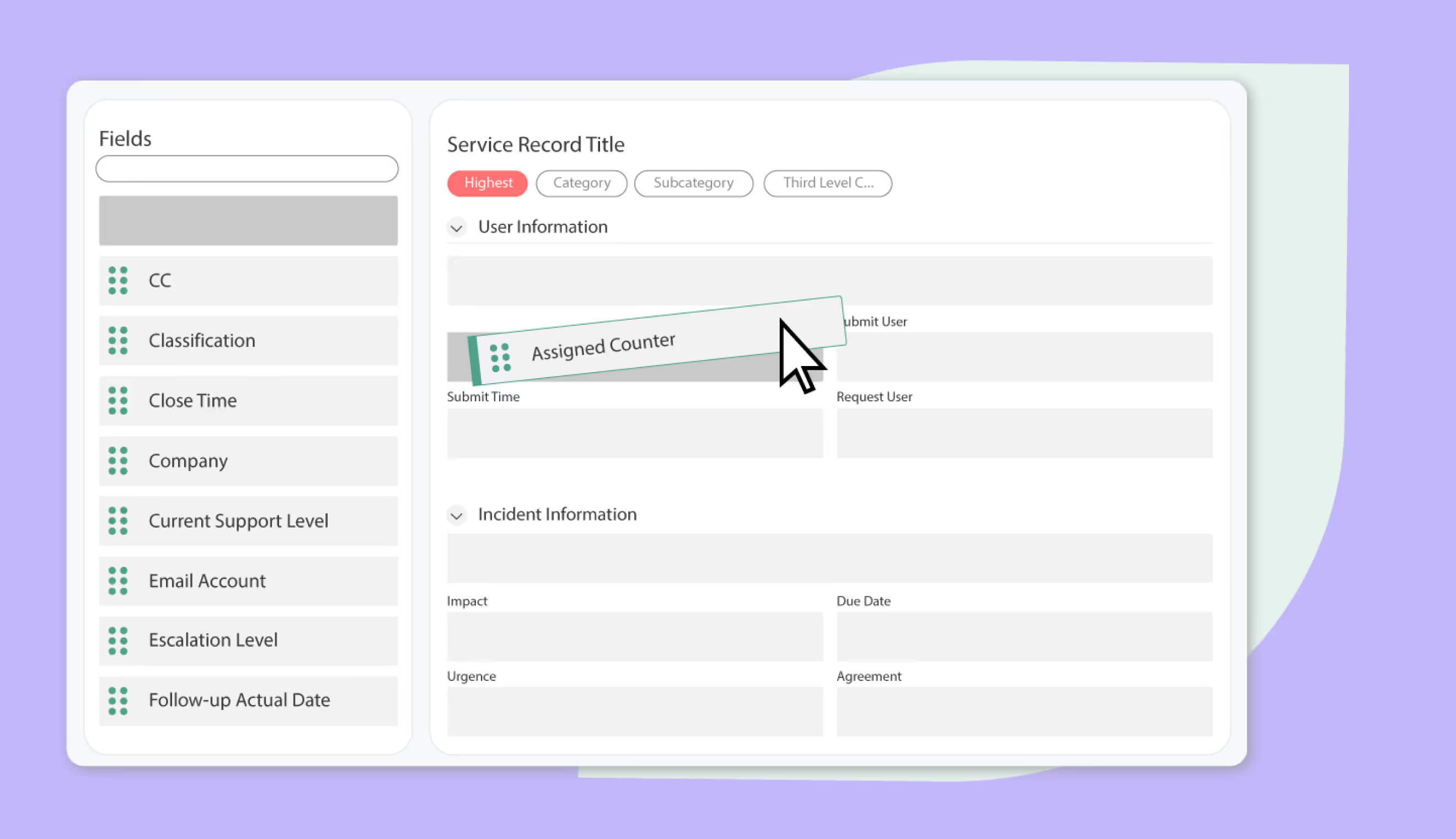
TOPdesk handles both IT service management and facilities management through its CAFM module, a combination that’s rare in the market. Work order processing, maintenance scheduling, property registration, and visitor monitoring sit alongside standard ITSM capabilities.
This makes TOPdesk a strong fit for mid-sized organizations that run IT and facilities from the same team. The flip side: if you’re purely evaluating ITSM depth, purpose-built platforms will offer more automation and AI capabilities.
Best for: Mid-sized enterprises managing IT and facility operations together. Not ideal for IT-only evaluations where AI and automation depth are priorities.

13. Zluri
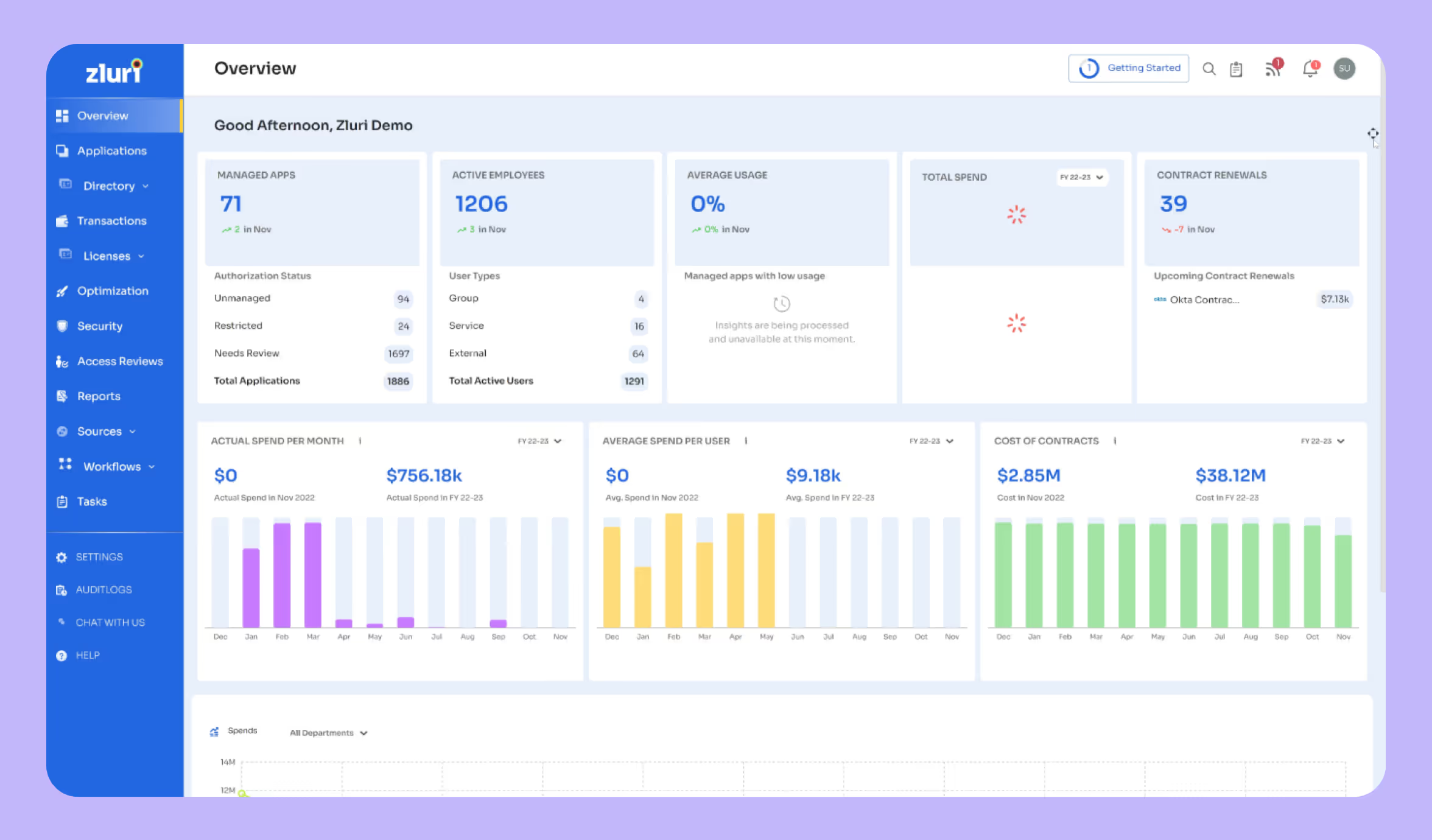
Zluri offers a refreshing alternative to BMC Helix where it focuses on SaaS lifecycle management and access governance. Its Employee App Store replaces manual app approval processes with intelligent automation based on job roles and seniority levels.
Zluri is less of a full ITSM replacement and more of a complementary tool for organizations where app sprawl and access governance are the primary pain points. It integrates with existing IT tools, but it won’t cover incident management, change management, or the broader ITSM workflow.
Best for: Organizations focused on SaaS governance and app provisioning. Not ideal as a standalone BMC replacement for full ITSM needs.
What should you look for in a BMC replacement?
The list above covers a wide range, from agentic platforms to legacy enterprise suites to specialized point solutions. The right choice depends on where your organization sits and where it’s headed.
A few questions worth asking before you shortlist:
- Is AI native to the architecture, or is it bolted on? This determines whether the platform can act autonomously or just suggest actions for a human to complete. It’s the single biggest differentiator in the 2026 market.
- What’s the real total cost of ownership? License fees are the smallest part. Implementation consulting, ongoing administration, and the cost of changes and upgrades add up fast. Platforms that require certified consultants for basic configuration will always be more expensive than they look on the pricing page.
- Can it support where you’re going, not just where you are? If your organization is deploying AI agents across functions, your ITSM platform needs to support AI as first-class workforce members and not just as a chatbot layer on top of the service portal.
For a structured evaluation framework, the 2026 ITSM Buyer’s Guide walks through what to look for, what to avoid, and how to calculate real TCO across modern ITSM platforms. Happy evaluating!
Frequently asked questions about BMC alternatives
1. Who are BMC Software’s main competitors?
BMC’s closest competitors in 2026 include ServiceNow (now with Moveworks integrated), Ivanti Neurons, Jira Service Management, Freshservice, and ManageEngine. AI-native platforms like Atomicwork represent a newer category covering agentic service management that replaces ticket-centric workflows with agent-driven resolutions for the new AI workforce.
2. What are the main disadvantages of BMC Helix?
The most common concerns are complex configuration that requires deep technical expertise, high total cost of ownership when you factor in consulting and maintenance, slower implementation timelines, and an architecture that layers AI onto ticket-centric workflows rather than building it natively for autonomous execution.
3. Can AI-native platforms fully replace BMC?
Yes, for the right use cases. Agentic service management platforms like Atomicwork can replace traditional ticket-based systems by resolving incidents autonomously, integrating identity and system context, and reducing manual triage. Organizations like Pepper Money and Ammex Corp have replaced legacy platforms with AI-native alternatives and reported faster deployment, higher deflection rates, and lower operational costs.
4. How do agentic platforms differ from traditional ITSM?
Traditional ITSM manages ticket lifecycles through predefined workflows. Agentic service management uses coordinated AI agents that reason through context, make decisions, and execute actions, resolving requests directly and escalating only when human judgment is required.
5. What should enterprises evaluate before moving away from BMC?
Architecture maturity (is AI native or bolted on?), integration with identity systems, AI execution capability, security compliance, deployment timeline, and total cost of ownership. The ITSM buyer’s checklist provides a structured framework for this evaluation.


You may also like...